GRE Alpha Returns to Light + Building 2026 With Its Most Ambitious Showcase Yet
GRE Alpha is returning to Light + Building 2026 — March 8–13 at Messe Frankfurt in Frankfurt am Main, Germany — with a full lineup of new products and live demonstrations.
The latest innovations from GRE Alpha will be on display in Hall 8.0, Booth G37, giving attendees a hands-on look at the company's newest offerings. After years of participation within the EnOcean consortium, the company is expanding into a dedicated booth, marking a new chapter in its presence at one of the world's leading trade fairs for lighting and building technology.
"This year marks a significant turning point for GRE Alpha at Light + Building," said Richard Fong, director at GRE Alpha. "After years of successful collaboration within the EnOcean consortium, we're debuting our own booth — giving us the space to fully showcase the breadth of our innovation and provide a more focused experience for our partners and customers."
What We're Showcasing
We're bringing some of our most exciting product developments to Frankfurt this year, including live demos and new partnerships you won't want to miss.
Lumifree, JDI's world-leading dynamic light-distribution control technology, will be front and center at our booth — with live demonstrations featuring Dauer's Lumifree-based Uplight and XK Glow's Lumifree-based light system. It's a collaboration we're genuinely proud of.
"We are particularly excited to be collaborating closely with JDI to bring cutting-edge beam shaping technology to the forefront of the LED industry. By integrating these advancements into our power solutions, we're not just powering lights — we're helping redefine how light is shaped and experienced in modern architectural spaces," says Fong.
We'll also be showcasing a new 40W RFID/NFC driver, branded and distributed by our partners at CDI [datasheet link — pending], along with the LUNA light switch — a battery-less, energy-harvesting Bluetooth rocker switch that enables wireless building integration without any battery maintenance.
"Sustainability meets seamless control with the debut of our battery-less, energy-harvesting LUNA light switch. This Bluetooth-enabled rocker switch is a game-changer for building management, allowing for wireless integration without the maintenance headache of batteries. It's the perfect example of the 'smart and sustainable' solutions we're bringing to Frankfurt this year," says Fong.
A Connected Lineup
As always, we'll be showcasing one of the industry's widest arrays of smart control modules — featuring integrations with Casambi, EnOcean, DiiA, and Tuya — alongside additional products from our Japan and China-based lines. You can browse the full catalog here.
"At GRE Alpha, we believe the future of lighting is intelligent and interconnected. That's why we've built one of the industry's widest arrays of control modules in collaboration with world-class partners like Casambi, EnOcean, DiiA, and Tuya. We're excited to show the market how these seamless integrations make smart lighting more accessible than ever," says Fong.
We're looking forward to connecting with integrators, OEMs, specifiers, and lighting partners from around the world.
Come find us at Hall 8.0, Booth G37 — and if you'd like to schedule a meeting ahead of the show, visit grealpha.com/contact.
About GRE Alpha
GRE Alpha® Electronics, Ltd. specializes in the design and manufacturing of solid-state lighting power supplies and lighting control accessories, which are the lifeblood of indoor and outdoor LED lighting systems. Their superior performance products power LED lighting systems. GRE's modular approach allows their dimming modules and drivers to be used either with existing systems or new setups.
For more information on GRE Alpha products and services or to speak with a service representative and set up a one-on-one appointment with a technical expert, visit https://grealpha.com/contact/.
LED Lighting Technology Trends 2026: Market Forces Driving Industry Innovation
The LED lighting industry in 2026 isn't driven by generic efficiency promises anymore.
Regulatory compliance, supply chain realities, and deployable technologies now shape purchasing decisions.
The changes are concrete. DOE standards finalized in 2024 take effect in 2028. California's Title 24-2025 went live on January 1st. Automotive LED accessories represent a $15+ billion global market. Technologies like liquid crystal light distribution control are moving from labs into installations.
For manufacturers, specifiers, and distributors, 2026 is about knowing which shifts impact your business and which are noise. This outlook focuses on market opportunities, regulatory requirements, and technologies ready for deployment—the information needed to make smart decisions this year.
Market Growth: Where the Money's Moving
The LED market in 2026 is about predictable growth in established segments and identifying where margins actually exist.
Total market size matters less than understanding where profitable revenue concentrates and which customer segments are actively spending.
Financial Landscape and Growth Projections
The LED lighting market will hit $105 billion in 2026, growing at a steady 5-6% CAGR through 2030. That's mature-market growth—not the explosive, double-digit gains of early-adopter years.
What's driving it? Three factors: regulatory phase-outs of inefficient lighting, secondary replacement cycles as early LED installations age out, and smart city infrastructure projects with long-term procurement pipelines.
Asia-Pacific still dominates with 44% market share, powered by China's manufacturing capacity and India's infrastructure buildout. North America and Europe grow slower but show higher average selling prices, particularly for integrated control systems and architectural applications.
The real story isn't total market size—it's where margins exist. Integrated luminaires command 62% of revenue because they bundle optics, thermal management, and controls into higher-value products with longer replacement cycles. Lamp retrofits are growing faster at 8.4% CAGR as building owners seek quick performance upgrades without rewiring, but at lower price points.
Automotive LED Accessories: The Emerging Revenue Stream
Automotive LED lighting is a $15+ billion market in 2026, and the aftermarket segment is outpacing OEM growth. Aftermarket is projected at 5.6-8.9% CAGR through 2030 versus 4.9% for OEM installations.
Why the aftermarket surge? Vehicle customization is mainstream. Enthusiasts aren't just replacing headlights—they're adding underbody lighting, interior ambient systems, and off-road LED bars. The market extends beyond passenger vehicles into trucks, off-road vehicles, and specialty applications.
Products like XK Glow's automotive accessories demonstrate the range: wireless-controlled RGB systems, rock lights for off-roading, and plug-and-play kits that don't require professional installation. This segment appeals to younger buyers treating vehicles as customizable platforms, not just transportation.
For LED component manufacturers, the automotive aftermarket demands different requirements: vibration resistance, IP ratings for weather exposure, 12V/24V compatibility, and, increasingly, wireless control via Bluetooth or smartphone apps.
Aftermarket Expansion and Customization Trends
The aftermarket isn't just automotive. Commercial retrofit continues as a steady revenue stream. Building owners facing replacement cycles for decade-old LED systems are skipping like-for-like swaps in favor of smart-enabled infrastructure.
E-commerce is accelerating aftermarket growth at 6.6% CAGR, giving end users direct access to commercial-grade products previously available only through distributors. This channel works particularly well in emerging markets—India, Southeast Asia, Brazil—where DIY installation and cost-conscious upgrades drive volume.
The pattern is clear: customers want performance improvements and new capabilities, not just replacement bulbs. That means opportunities for manufacturers offering modular systems, simple integration paths, and clear value propositions beyond "lasts longer, uses less power."
Regulatory Push Accelerates LED Adoption
Regulations are here, and they're reshaping product portfolios more than any market trend. Compliance deadlines and efficiency thresholds are now baseline requirements, not differentiators.
U.S. DOE 2028 Standards: The CFL Phase-Out
In April 2024, the DOE finalized new efficiency standards for general service lamps that take effect July 2028. The requirement jumps from 45 lumens per watt to 120 lumens per watt—a threshold LEDs easily clear but CFLs cannot meet.
This is a hard phase-out of compact fluorescent technology. The DOE explicitly states "the new efficiency levels can be met by a broad variety of widely available LED bulbs but not by compact fluorescent bulbs."
For manufacturers, CFL production lines have a two-year sunset. For distributors, inventory strategies need to account for unmarketable stock post-2028. For specifiers, it confirms what's already obvious: specify LED now. Next-generation LEDs are hitting 200+ lumens per watt, making the 120 threshold conservative.
California Title 24-2025 Takes Effect
California's Title 24-2025 went live January 1, 2026, applying to all newly constructed or altered buildings. Updated standards increase lighting control requirements beyond simple occupancy sensing: mandatory daylight-responsive controls in spaces with windows, multi-level switching or dimming for general lighting, and stricter automatic shut-off requirements.
The standards also require lighting systems maintain uniform illumination when dimmed—a specification that favors LED's native dimming capabilities. For California projects, building permits require documented compliance. Manufacturers must provide test data and spec sheets proving compliance.
California often leads—expect similar provisions in other state energy codes over the next 2-3 years.
Australia's GEMS Regulations and Global Patterns
Australia registered new Greenhouse and Energy Minimum Standards (GEMS) for LED lamps in March 2025, effective March 2026, raising minimum efficacy thresholds and extending the incandescent ban through October 2030.
The pattern is global: developed economies are tightening efficiency standards with clear compliance schedules. Europe enforces Ecodesign Directive requirements. Asian markets implement their own efficiency mandates.
For manufacturers serving international markets, this creates a patchwork of compliance. Products engineered to meet the strictest standards (California, EU) typically meet requirements in other regions. The alternative—separate product lines per market—is operationally complex and increasingly uneconomical.
The regulatory trajectory is clear: efficiency floors keep rising, and LED becomes the only viable option for meeting mandated performance levels.
Technology Breakthroughs Reshaping Control and Performance
Most "breakthroughs" in LED are incremental. Here’s what actually matters in 2026: liquid crystal light distribution control shipping in real installations, AI-driven maintenance moving from theory to practice, and wireless protocols becoming standard.
LumiFree: Liquid Crystal Meets LED Distribution Control
LumiFree, developed by Japan Display Inc. and in mass production since July 2023, uses liquid crystal technology to electronically control light distribution without moving parts. It adjusts beam shape and spread along X and Y axes independently—one fixture handles multiple lighting scenarios that previously required separate fixtures.
Real-world proof: The Tottori Prefectural Museum of Art installed LumiFree-equipped fixtures in March 2025 for their 4-meter-high gallery. Staff adjust light distribution, brightness, and color temperature on demand for different exhibit sizes without repositioning fixtures.
GRE Alpha partnered with JDI in April 2024 to develop LED drivers and dimming modules that simultaneously control LEDs and LumiFree. The partnership enables wireless control via Bluetooth Low Energy, Wi-Fi, and DMX, and creates interface products for existing lighting control systems.
Applications include commercial installations, architectural lighting, and smart buildings where lighting needs change frequently. Silent operation, no mechanical parts, and capabilities impossible with static optics.
AI-Driven Maintenance and DALI Protocol Integration
AI integration with DALI-certified LED drivers enables predictive maintenance. Systems analyze usage patterns and performance data to identify potential failures before they occur, signaling maintenance needs proactively.
Large installations can predict which drivers will fail within a timeframe, schedule maintenance during off-hours, and avoid emergency calls. This shifts maintenance from reactive response to planned operations with measurable cost reductions.
DALI provides the communication backbone. Each driver is individually addressable, feeding performance data where AI detects anomalies and degradation patterns.
Wireless Control Evolution: BLE, Wi-Fi, and DMX
Wireless control is no longer a premium add-on but a standard expectation. Commercial applications now routinely utilize protocols like Bluetooth Low Energy (BLE), Wi-Fi, and DMX. Similarly, Casambi-ready modules, which were once considered specialized, are now a standard offering in high-end installations.
The practical impact? Faster installations, easier reconfigurations, and user control via smartphones without proprietary hardware. For retrofits, wireless enables smart functionality without opening walls for control cables.
Industry Events Worth Your Time in 2026
LEDucation 2026 – New York City, April 14-15, 2026 LED-focused event for architectural and design communities. Strong emphasis on practical applications and technical education covering driver selection, system integration, and code compliance. Features over 400 exhibitors and 40+ accredited presentations. 20th anniversary edition with new "Designer Hours" offering exclusive early access for design professionals. Non-profit event with proceeds supporting lighting education.
Light + Building 2026 – Frankfurt, March 8-13, 2026 World's leading trade fair for lighting and building services technology. Global perspective on industry developments with particular strength in European market trends and regulatory compliance. This year highlights convergence of lighting control with building automation. Extensive displays of wireless control technologies and integration platforms. Expected 3,000+ exhibitors and 250,000+ attendees from over 150 countries.
Hong Kong International Lighting Fair (Spring Edition) – Hong Kong, April 20-23, 2026. This is the essential event for understanding Asian manufacturing trends and connecting with component suppliers. Asia's largest lighting fair and second-largest worldwide. Provides direct visibility into production capabilities, lead times, and emerging supply chain dynamics. Critical event for anyone managing procurement or evaluating new manufacturing partners. Features 1,400+ exhibitors and 21,000+ attendees.
Note: LightFair International has moved to a biennial schedule and only occurs in odd-numbered years (2025, 2027, etc.). There is no LightFair in 2026.
The Bottom Line
In 2026, the LED lighting industry is characterized by the practical deployment of new technologies, a focus on supply chain efficiency, and adherence to regulatory standards.
For manufacturers, distributors, and specifiers: the decisions you make in 2026 need to account for compliance deadlines two years out, tariff implications on component sourcing, and customers who expect wireless control as standard—not premium add-ons.
The margin opportunities exist in integrated solutions, aftermarket channels, and segments where regulatory mandates create clear requirements. Generic efficiency claims don't differentiate anymore. Compliance documentation, real-world performance data, and deployable technology do.
Want to discuss how these trends impact your LED component sourcing or product development?
Contact GRE Alpha to explore driver solutions, wireless control integration, and LumiFree technology partnerships. Visit www.grealpha.com or reach out directly to connect with our technical team.
GRE Alpha Secures Exclusive North American Distribution Rights for Revolutionary LumiFree LED Technology from Japan Display Inc.
November 11th 2025GRE Alpha Secures Exclusive North American Distribution Rights for Revolutionary LumiFree LED Technology from Japan Display Inc.
Partnership Brings Game-Changing Light Control Innovation to U.S. and Canadian Markets
Hong Kong – GRE Alpha Electronics, Ltd., a leading manufacturer and distributor of advanced LED power solutions and lighting control accessories, has announced an exclusive distributorship agreement with Japan Display Inc. (JDI) to bring LumiFree™ LED lighting fixtures to North America.
This strategic partnership positions GRE Alpha at the forefront of next-generation lighting technology that virtually eliminates light distribution waste while delivering unprecedented control and efficiency.
Revolutionary Technology Meets Market Demand
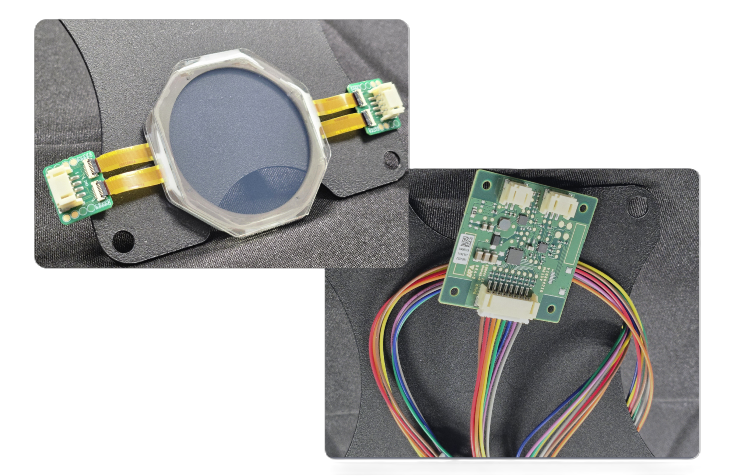
LumiFree™ leverages JDI's proprietary display technology to achieve what traditional LED systems cannot: two-axis light distribution control. Since its introduction in Japan in 2023, the technology has demonstrated remarkable capabilities across diverse applications, from retail environments requiring precise merchandise highlighting to outdoor installations where light pollution control is paramount.
The partnership accelerates GRE Alpha's mission to deliver cutting-edge LED solutions that go beyond basic illumination. With established expertise in LED drivers, dimming modules, and control systems, GRE Alpha is uniquely positioned to support LumiFree™ integration into existing lighting infrastructure while providing the technical expertise North American specifiers and contractors demand.
Transforming Multiple Market Segments
GRE Alpha will target key verticals where LumiFree™ precision control delivers immediate value:
- Retail & Hospitality: Create immersive experiences with dynamic, programmable lighting that adapts to merchandise, time of day, or special events
- Commercial Office: Enhance productivity with human-centric lighting that reduces glare and eye strain while maximizing energy efficiency
- Museums & Galleries: Protect sensitive artifacts with precisely controlled illumination that eliminates harmful UV and minimizes light exposure
- Outdoor & Architectural: Comply with increasingly stringent dark sky regulations while achieving stunning architectural effects
- Healthcare: Support patient well-being with circadian-aligned lighting that promotes natural sleep-wake cycles
Comprehensive North American Support
As the exclusive distributor, GRE Alpha will provide full technical support, training, and product customization services from its United States and Canada facilities. The company's extensive dealer network and established relationships with lighting designers, architects, and engineers ensure rapid market adoption.
About GRE Alpha Electronics, Ltd.
Founded in 1989 and headquartered in Hong Kong, GRE Alpha Electronics is a premier manufacturer and distributor of LED power supplies, dimming modules, and lighting control accessories.
With over three decades of experience in LED technology, GRE Alpha serves the global lighting market through innovation, quality, and exceptional customer service. The company maintains offices and distribution centers throughout North America, providing local support and rapid fulfillment to lighting professionals across the United States and Canada.
About Japan Display Inc.
Japan Display Inc. (JDI) is a leading global manufacturer of small- and medium-sized display panels, serving customers in automotive, industrial, and consumer electronics markets. The company's innovative technology platform extends beyond traditional displays to revolutionize LED lighting applications through unprecedented control and efficiency.
Media Contact:
GRE Alpha® Electronics, Ltd., North America
3030 McEver Rd. Bldg 1, Suite 140
Gainesville, GA 30504
Tel: (770) 538-0630
Fax: (770) 538-0640
Website: www.grealpha.com
GRE Alpha and GRE Manufacturing to Showcase Wireless Control Innovation at EnOcean Alliance Summit 2025
September 16th 2025GRE Alpha and GRE Manufacturing to Showcase Wireless Control Innovation at EnOcean Alliance Summit 2025
Joint participation demonstrates companies' expanding global presence and technological leadership in wireless building automation.
Frankfurt, Germany – September 16, 2025 – GRE Alpha Electronics and GRE Manufacturing will participate in the EnOcean Alliance Summit 2025, taking place September 24-25 in Frankfurt, Germany. This marks a significant milestone in the companies' strategic expansion into the European market, following successful growth across North America and Asia.
Yoshihito Mori, Japan Country Manager for Sales & Marketing, will represent both companies at the summit, participating in expert panels and live product demonstrations.
The event will showcase the synergy between GRE Alpha's wireless control expertise and GRE Manufacturing's contract manufacturing capabilities, reinforcing their combined strength in delivering innovative building automation solutions.
Advanced Wireless Control Technology on Display
At the summit, GRE Alpha will demonstrate its latest EnOcean Wireless LED Dimming Module, which enables smooth, flicker-free dimming with energy harvesting wireless switches. The module supports multiple regional frequencies (902MHz NA, 928MHz JP, 868MHz EU/China) and is designed for seamless integration into both existing and new automation projects.
Complementing the dimming module, GRE Alpha will also showcase the ENO-LUNA universal energy harvesting wireless switch. Available in both European and US form factors, the ENO-LUNA utilizes an electro-dynamic energy transducer that converts rocker movement into electrical energy, powering maintenance-free Bluetooth Low Energy transmission. Every rocker press or release generates the energy needed to transmit button status, eliminating the need for batteries or external power sources while providing reliable wireless control.
The technology addresses key challenges in building automation by eliminating the need for additional control wiring, reducing installation complexity and associated costs while providing enhanced control flexibility through wireless connectivity.
.png)
Strategic Partnership Drives Innovation
The joint participation highlights the complementary strengths of both companies. GRE Alpha's expertise in LED power solutions and wireless control technology combines GRE Manufacturing's capabilities as a premier technology leader in contract manufacturing, including its Vietnam facility. This partnership enables comprehensive support for multinational customers from initial design through final delivery.
The companies' wireless control solutions support applications across architectural lighting, commercial installations, industrial environments, and smart building integration, offering architects, lighting designers, and OEMs complete flexibility in their project requirements.
Summit Engagement and Networking
During the two-day summit, attendees will experience industry panel discussions, technology showcases, and networking sessions focused on wireless control, energy harvesting technologies, and building automation innovations. GRE Alpha and GRE Manufacturing representatives will be available to discuss how their solutions can be customized for specific project requirements and regional market needs.
The EnOcean Alliance Summit serves as a vital platform for demonstrating cutting-edge innovations to B2B decision-makers, procurement managers, and OEMs seeking reliable, energy-efficient wireless solutions for intelligent building systems.
About GRE Alpha
GRE Alpha Electronics, Ltd. specializes in the design and manufacture of advanced LED power supplies, building automation solutions, and lighting control accessories. Their high-performance, reliable LED dimming modules—including EnOcean-compatible options for wireless, flicker-free dimming—are trusted worldwide in intelligent building and industrial applications. Learn more at www.grealpha.com.
About GRE Manufacturing
GRE Manufacturing is a premier contract manufacturing partner with engineering and production facilities in Vietnam, supporting multinational customers with a comprehensive suite of services from design to delivery. Discover more at www.gremanufacturing.com.
About EnOcean Alliance
EnOcean Alliance is a global leader in the development and promotion of wireless, batteryless sensor solutions for intelligent buildings and the Internet of Things (IoT), fostering an ecosystem of innovation for energy-efficient smart spaces. More information at www.enocean-alliance.org.
Supply Chain Resilience in the LED Industry: Adapting to New Realities
The LED lighting industry has significantly transformed in recent years, driven by evolving market demands and supply chain disruptions. Reliability now stands at the forefront of purchasing decisions, a priority heightened by the lessons learned from recent supply chain turmoil. Manufacturers are adjusting to the changing supply chain environment through technology and strategic approaches to enhance resilience.
Reliability Takes Center Stage
Gone are the days when procurement was purely price-driven. According to the latest ISM Business Outlook survey, supply chain disruptions have shifted priorities, with 30% of manufacturers intentionally holding higher inventory levels to mitigate risks. OEMs and procurement managers now emphasize supplier reliability alongside affordability.
This strategic pivot ensures manufacturers can consistently meet demand, even in the face of global challenges like geopolitical shifts or natural disasters that impact production hubs.
Regional Manufacturing Rises to Meet Demand
While the Asia-Pacific region continues to dominate LED component manufacturing, a noticeable shift is underway. Regional hubs focused on producing specialized products, such as high-end drivers and controls, are gaining momentum. As the United States has encountered tariff concerns, factories in countries like Vietnam have gained favor for mitigating extra costs without compromising production quality.
Key Benefits of Regional Manufacturing:
- Faster Delivery: Regional manufacturing helps reduce lead times and enables suppliers to respond rapidly to market fluctuations.
- Enhanced Control: With specialty production, localized supply chains can improve oversight, reducing risks related to logistics and quality.
- Customization: Closer proximity to markets allows tailored solutions to address specific industry requirements and enables a deeper understanding of their unique needs.
GRE Alpha exemplifies this trend by maintaining strategic manufacturing locations that align with customer needs while minimizing transit delays.
Sourcing Smarter Through Diversification
The recent supply chain hardships have reinforced a crucial lesson for manufacturers and OEMs: don't put all your eggs in one basket. Diversified supplier networks mitigate risks of shortages while providing more flexibility to meet market-specific demands.
By working with vendors across geographically dispersed locations, companies ensure that disruptions in one region don’t lead to project delays or unsatisfied customers.
Quality as a Competitive Differentiator
The growing global nature of supply chains means quality assurance has never been more critical for OEMs, designers, and architects relying on LED components such as drivers and dimmers. Ensuring consistent performance requires stringent quality control measures across all manufacturing levels.
As a result, manufacturers are:
- Stepping up component validation processes to eliminate performance inconsistencies.
- Prioritizing testing expertise for high-stakes components like LED controllers and drivers, where reliability directly affects lighting systems' operational quality.
- Adopting traceability solutions powered by digital tools to track quality at every junction in the supply chain.
Strengthening Resilience Through Collaboration
The unpredictable nature of today’s supply chain landscape demands adaptability. By leveraging our distributor network's technical depth and market insights, GRE Alpha can maintain consistent product availability across the globe. For OEMs and procurement managers, this level of reliability means less downtime, faster project execution, and sustained performance, even in challenging market conditions. Meanwhile, architects and lighting designers benefit from the assurance that GRE Alpha components are readily available for specification, with no compromise on quality or delivery timelines.
Our distributors and colleagues at GRE Manufacturing also play a key role in mitigating risks. Their ability to provide localized inventory and logistical support reduces dependence on long, global transport routes, improving availability and sustainability within the supply chain. Additionally, their expertise ensures that our products meet varied standards and regulations, from local building codes to environmental certifications.
The Future of Supply Chains in a Globalized LED Market
The LED lighting sector is poised for further growth, with the global market expected to exceed $100 billion in 2025. This expansion highlights the importance of maintaining robust supply chain practices. Supply chain agility, bolstered by regional manufacturing, diversified sourcing, and technology-driven improvements, will be critical in positioning companies for success.
For procurement managers and OEMs, the takeaway is clear:
- Choose reliability over short-term cost savings.
- Leverage emerging technologies like AI to address supply chain complexities.
- Prioritize quality control to ensure a superior end-user experience.
Proactive supply chain strategies will ultimately separate industry leaders from those playing catch-up in an increasingly competitive global market.
Explore GRE Alpha’s Distributor Network
To ensure the reliability and performance your projects demand., GRE Alpha’s global network of distributors is here to support you.
Discover how our distributors can deliver value, performance, and peace of mind. Visit GRE Alpha's distributor network page to explore our strategic partners and find the solution provider best suited to your needs.